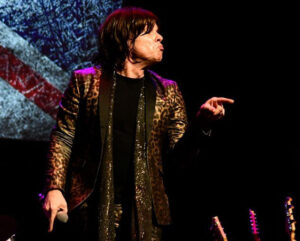
Start Me Up Garden Grove Rolling Stones Tribute
Start Me Up comes to Garden Grove this summer!!!!
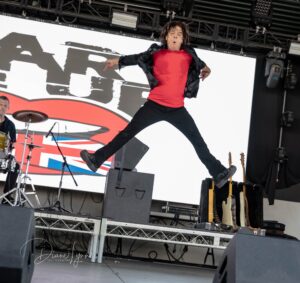
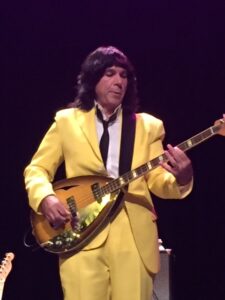
Celebrate summer with your favorite Rolling Stones tribute band, Start Me Up!!
July 23 in Garden Grove. Show starts at 7pmThe Rolling Stones in the 1980s was a period of high commercial success, intense internal conflict, and musical adaptation to the MTV era. Despite creative friction, they released major hits like “Start Me Up” and Tattoo You (1981), and wrapped the decade with Steel Wheels (1989). The era was defined by the tension between Mick Jagger and Keith Richards, and a shift towards dance-oriented rock and pop.
Emotional Rescue (1980): Kicked off the decade with a No. 1 album, continuing the disco-rock exploration of Some Girls.
Tattoo You (1981): A massive commercial success, featuring the hit “Start Me Up” and holding the top of the US charts for nine weeks
Dirty Work (1986): Created during a period of deep infighting, with a notable cover of “Harlem Shuffle,” as noted in this uDiscoverMusic article.
Steel Wheels (1989): Marked a return to form and a stabilization of band relationships, launching a massive comeback tour, as shown in this Rolling Stone article.
Watch the official music video for ‘Start Me Up’ from their 1981 album, Tattoo You:
- The Jagger-Richards Feud: The band nearly split, as Jagger pursued a solo career and was less committed to touring during the mid-80s, according to this American Songwriter article.
- Musical Style Changes: The band experimented with funk and dance influences, while also incorporating the polished, synthesizer-heavy production popular in the 1980s.
- Loss of Ian Stewart: Founding member and pianist Ian Stewart died in 1985, which deeply affected the band.
- Live Shows: Despite not touring for Dirty Work, they returned with the massive Steel Wheels tour in 1989, solidifying their reputation as a premier live act.
-
Top 80s Songs (Per Critic/Fan Polls)
- “Start Me Up” (Tattoo You, 1981)
- “Waiting on a Friend” (Tattoo You, 1981)
- “Emotional Rescue” (Emotional Rescue, 1980)
- “Mixed Emotions” (Steel Wheels, 1989)
- “Undercover of the Night” (Undercover, 1983)
- “One Hit (To The Body)” (Dirty Work, 1986)
The band’s second UK LP, The Rolling Stones No. 2, was released in January 1965 and reached number 1 on the charts. The US version, released in February as The Rolling Stones, Now!, reached number 5. The album was recorded at Chess Studios in Chicago and RCA Studios in Los Angeles.[80] In January and February of that year, the band played 34 shows for around 100,000 people in Australia and New Zealand.[81] The single “The Last Time“, released in February, was the first Jagger/Richards song to reach number 1 on the UK charts;[65] it reached number 9 in the US. It was later identified by Richards as “the bridge into thinking about writing for the Stones. It gave us a level of confidence; a pathway of how to do it.”[82]
Their first international number 1 hit was “(I Can’t Get No) Satisfaction“, recorded in May 1965 during the band’s third North American tour. Richards recorded the guitar riff that drives the song with a fuzzbox as a scratch track to guide a horn section. Nevertheless, the final cut did not include the planned horn overdubs. Issued in the summer of 1965, it was their fourth UK number 1 and their first in the US, where it spent four weeks at the top of the Billboard Hot 100. It was a worldwide commercial success for the band.[82][83] The US version of the LP Out of Our Heads, released in July 1965, also went to number 1; it included seven original songs, three Jagger/Richards numbers and four credited to Nanker Phelge.[84] The UK version of Out of Our Heads was released in September 1965.[85] Their second international number 1 single “Get Off of My Cloud” was released in the autumn of 1965,[86] followed by another US-only LP, December’s Children (And Everybody’s).[87]
The album Aftermath, released in the late spring of 1966, was the first LP to be composed entirely of Jagger/Richards songs;[88] it reached number 1 in the UK and number 2 in the US.[89] According to The Daily Telegraph, Aftermath is often regarded as the most important of the band’s formative records.[90] On this album, Jones’ contributions expanded beyond guitar and harmonica. To the Middle Eastern-influenced “Paint It Black“[c] he added sitar; to the ballad “Lady Jane” he added dulcimer, and to “Under My Thumb” he added marimbas.[91]Aftermath also contained “Goin’ Home“, a nearly 12-minute song that included elements of jamming and improvisation.
The Stones’ success on the British and American singles charts peaked during the 1960s.[93][94] “19th Nervous Breakdown“[95] was released in February 1966, and reached number 2 in the UK[96] and US charts;[97] “Paint It Black” reached number 1 in the UK and US in May 1966.[65][94] “Mother’s Little Helper“, released in June 1966, reached number 8 in the US;[97] it was one of the first pop songs to discuss the issue of prescription drug abuse.[98][99] “Have You Seen Your Mother, Baby, Standing in the Shadow?” was released in September 1966 and reached number 5 in the UK[100] and number 9 in the US.[97] It had a number of firsts for the group: it was the first Stones recording to feature brass horns, and the back-cover photo on the original US picture sleeve depicted the group satirically dressed in drag. The song was accompanied by one of the first official music videos, directed by Peter Whitehead.[101][102]
During their North American tour in June and July 1966, the Stones’ high-energy concerts proved highly successful with young people, while alienating local police who had the physically exhausting task of controlling the often rebellious crowds. According to the Stones historians Philippe Margotin and Jean-Michel Guesdon, the band’s notoriety “among the authorities and the establishmentseems to have been inversely proportional to their popularity among young people”. In an effort to capitalise on this, London released the live album Got Live If You Want It! in December.[103] The band’s first greatest hits album, Big Hits (High Tide and Green Grass), was released in the UK in November 1966, a different version of which had been released in the US in March that year.[104]
In January 1967, Between the Buttons was released, and reached number 3 in the UK and number 2 in the US. It was Andrew Oldham’s last venture as the Rolling Stones’ producer. Allen Klein took over his role as the band’s manager in 1965. Richards recalled, “There was a new deal with Decca to be made … and he said he could do it.”[105] The US version included the double A-side single “Let’s Spend the Night Together” and “Ruby Tuesday“,[106] which went to number 1 in the US and number 3 in the UK. When the band went to New York to perform the numbers on The Ed Sullivan Show in January, they were ordered to change the lyrics of the refrain of “Let’s Spend the Night Together” to “let’s spend some time together”.[107][108]
In early 1967, Jagger, Richards, and Jones began to be hounded by authorities over their recreational drug use, after the News of the World ran a three-part feature entitled “Pop Stars and Drugs: Facts That Will Shock You”.[109] The series described alleged LSD parties hosted by the Moody Blues and attended by top stars including the Who‘s Pete Townshend and Cream‘s Ginger Baker, and described alleged admissions of drug use by leading pop musicians. The first article targeted Donovan (who was raided and charged soon after); the second instalment (published on 5 February) targeted the Rolling Stones.[110] A reporter who contributed to the story spent an evening at the exclusive London club Blaise’s, where a member of the Rolling Stones allegedly took several Benzedrine tablets, displayed a piece of hashish, and invited his companions back to his flat for a “smoke”. The article claimed this was Mick Jagger, but it turned out to be a case of mistaken identity; the reporter had in fact been eavesdropping on Brian Jones. Two days after the article was published, Jagger filed a writ for libel against the News of the World.[111][110]
A week later, on 12 February, Sussex police, tipped off by the paper,[d] raided a party at Keith Richards’ home, Redlands. No arrests were made at the time, but Jagger, Richards, and their friend art dealer Robert Fraser were subsequently charged with drug offences. Andrew Oldham was afraid of being arrested and fled to America.[113][114] Richards said in 2003, “When we got busted at Redlands, it suddenly made us realize that this was a whole different ball game and that was when the fun stopped. Up until then it had been as though London existed in a beautiful space where you could do anything you wanted.”[115]
Marvin as Bill Wyman In March 1967, while awaiting the consequences of the police raid, Jagger, Richards, and Jones took a short trip to Morocco, accompanied by Marianne Faithfull, Jones’ girlfriend Anita Pallenberg, and other friends. During this trip the stormy relations between Jones and Pallenberg deteriorated to the point that she left Morocco with Richards.[116] Richards said later: “That was the final nail in the coffin with me and Brian. He’d never forgive me for that and I don’t blame him, but hell, shit happens.”[117] Richards and Pallenberg would remain a couple for twelve years. Despite these complications, the Rolling Stones toured Europe in March and April 1967. The tour included the band’s first performances in Poland, Greece, and Italy.[118] June 1967 saw the release of the US-only compilation album Flowers.[119]
On 10 May 1967, the day Jagger, Richards and Fraser were arraigned in connection with the Redlands charges, Jones’ house was raided by police. He was arrested and charged with possession of cannabis.[107] Three of the five Stones now faced drug charges. Jagger and Richards were tried at the end of June. Jagger received a three-month prison sentence for the possession of four amphetamine tablets; Richards was found guilty of allowing cannabis to be smoked on his property and sentenced to a year in prison.[120][121] Both Jagger and Richards were imprisoned at that point but were released on bail the next day, pending appeal.[122]
The Times ran an editorial, “Who breaks a butterfly upon a wheel?“, in which conservative editor William Rees-Mogg surprised his readers by his unusually critical discourse on the sentencing, pointing out that Jagger had been treated far more harshly for a minor first offence than “any purely anonymous young man”.[123] While awaiting the appeal hearings, the band recorded a new single, “We Love You“, as a thank you for their fans’ loyalty. It began with the sound of prison doors closing, and the accompanying music video included allusions to the trial of Oscar Wilde.[124][125][126] On 31 July, the appeals court overturned Richards’ conviction, and reduced Jagger’s sentence to a conditional discharge.[127] Jones’ trial took place in November 1967. In December, after appealing the original prison sentence, Jones received a £1,000 fine and was put on three years’ probation, with an order to seek professional help.[128]
In December 1967, the band released Their Satanic Majesties Request, which reached number 3 in the UK and number 2 in the US. It drew unfavourable reviews and was widely regarded as a poor imitation of the Beatles’ Sgt. Pepper’s Lonely Hearts Club Band.[129][130] Satanic Majesties was recorded while Jagger, Richards, and Jones were awaiting their court cases. The band parted ways with Oldham during the sessions. The split was publicly amicable,[131] but in 2003 Jagger said: “The reason Andrew left was because he thought that we weren’t concentrating and that we were being childish. It was not a great moment really—and I would have thought it wasn’t a great moment for Andrew either. There were a lot of distractions and you always need someone to focus you at that point, that was Andrew’s job.”[107] Satanic Majesties became the first album the Rolling Stones produced on their own. Its psychedelicsound was complemented by the cover art, which featured a 3D photo by Michael Cooper, who had also photographed the cover of Sgt. Pepper. Bill Wyman wrote and sang a track on the album: “In Another Land“, also released as a single, the first on which Jagger did not sing lead.[132]